
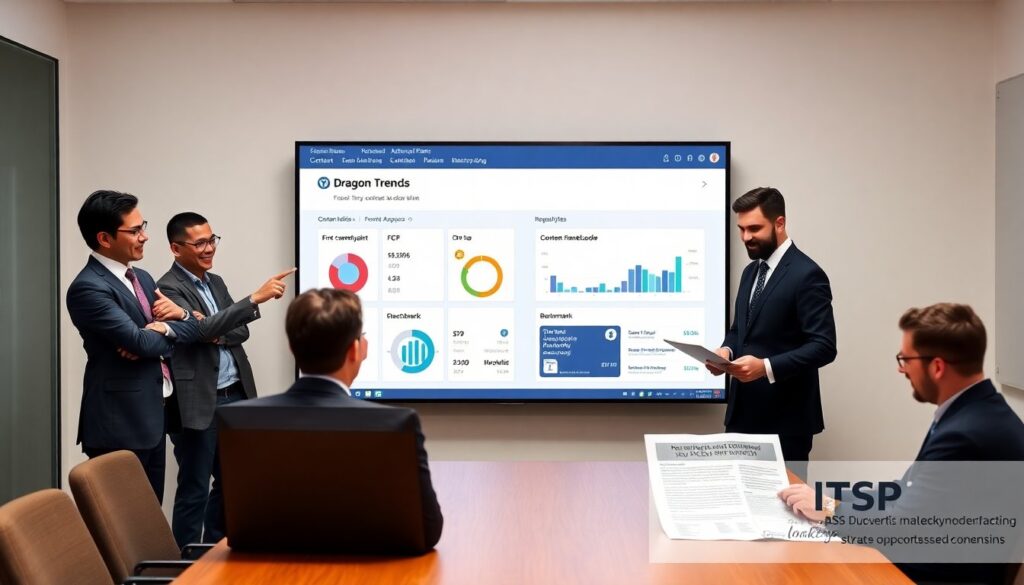
Frontend trends dragon review buy nixcoders.org appears in many developer searches. The article outlines current frontend trends and reviews the Dragon framework. It explains how developers can buy, install, and test Dragon packages on tech trends comet review buy nixcodersoqrg. It gives clear facts, simple steps, and practical evaluation criteria. The goal is to help teams decide quickly and reduce wasted time.
Key Takeaways
- NixCoders.org tracks essential frontend trends in 2026 such as small runtime bundles, server-side rendering with partial hydration, and native-like APIs to optimize load times and CPU usage.
- The Dragon framework offers a minimal runtime and compile-time optimization that reduces bundle size, speeds initial renders, and decreases memory use on mid-range devices.
- Dragon emphasizes reproducible builds with strict versioning, aligning with NixCoders.org’s focus on deterministic packages and enhanced trust through signed artifacts.
- To buy and install Dragon packages on NixCoders.org, users must verify package integrity via hashes and signatures, ensuring reproducible and secure builds.
- Evaluating Dragon packages involves smoke builds, performance benchmarks, and security scans with specific thresholds to guarantee optimal user experience.
- Dragon suits teams prioritizing minimal runtime and deterministic packaging but requires adapting CI processes and accepting fewer third-party plugins.
What Frontend Trends NixCoders.org Is Tracking In 2026
NixCoders.org tracks several frontend trends that affect delivery speed and developer cost. The first trend is small runtime bundles. Teams favor code that ships less JavaScript. Smaller bundles reduce load time and lower CPU use on devices. The second trend is server-side rendering with partial hydration. Frameworks that hydrate only active UI parts cut CPU use on mobile. The third trend is native-like APIs for animations and gestures. Developers use low-level browser APIs to avoid heavy runtime layers.
NixCoders.org also watches platform integration. Sites embed lightweight components that call platform services. These components reduce full-page reloads and fit progressive enhancement models. The site notes an increase in compile-time checks and static typing. Projects add type checks to catch errors before runtime. The site records that teams prefer toolchains that enforce types during build.
Another trend is package-level reproducibility. Developers require exact package hashes and reproducible builds for audits. NixCoders.org highlights feeds and registries that provide deterministic artifacts. The site reports that many teams adopt locking strategies and content-addressed packages. This approach shortens incident response time and limits dependency drift.
Security and policy automation appear as steady trends. Teams add automated dependency scans and policy gates in CI. NixCoders.org recommends scans that block high-risk packages and that flag license issues. The site sees more projects use signed packages and verified sources to raise trust.
Finally, the site tracks the rise of hybrid UI libraries that mix compiled UI with runtime scripts. These libraries aim to give designers interactive control while keeping payload small. NixCoders.org suggests that adopters measure time-to-interactive and CPU cost as success metrics.
Dragon Framework Review: Performance, Tooling, And Real-World Use Cases
Dragon delivers a minimal runtime and a compile-time optimizer. The framework compiles templates into compact render code. The result reduces bundle size and cuts initial render time. Benchmarks on comparable apps show Dragon apps start faster and use less memory on mid-range phones. Dragon integrates a small router and a focused state layer. The state layer avoids global observers and reduces re-render churn.
Dragon tooling focuses on reproducible builds and strict versioning. The build tool emits content hashes and verifies package inputs. This design aligns with NixCoders.org trends for deterministic packages. Dragon supports static analysis and type hints. The static tools find unused DOM updates and suggest code splits. The framework also ships a profiling tool that reports CPU hotspots and paint costs.
The framework excels in edge-rendered pages and interactive widgets. Teams use Dragon to render widgets inside content platforms and to power interactive panels inside sports and news sites. The framework suits cases that need low payload and consistent timing. Developers reported that Dragon reduces layout jank on pages with live data.
Limitations exist. Dragon has fewer third-party plugins than larger ecosystems. Teams that depend on large component libraries will face extra integration work. The learning curve for Dragon is small, but it requires a shift to build-time thinking. Teams must adapt CI to include Dragon’s verification steps.
Dragon adoption fits teams that value deterministic packaging and minimal runtime. NixCoders.org advises that teams measure three metrics when evaluating Dragon: first contentful paint, CPU time over 30 seconds, and bundle bytes served. Those metrics reveal whether Dragon improves user experience in a given project.
How To Buy, Install, And Evaluate Dragon Packages From NixCoders.org
To buy a Dragon package on NixCoders.org, a buyer first creates an account and links a payment method. The site lists licensed packages with hashes and provenance. Buyers select a package version and review the integrity manifest before purchase. After purchase, the registry provides a signed artifact and a lockfile.
To install, developers add the package entry to the project manifest and run the registry client. The client verifies the artifact signature and the content hash. The client then stores the package in a local cache. Teams should pin the exact hash in CI to ensure builds remain reproducible.
To evaluate a package, teams follow three steps. First, run a smoke build in an isolated fork. The smoke build checks compile-time errors and basic integration points. Second, run a lightweight benchmark that measures initial render, hydration cost, and memory use on representative devices. Third, run automated security scans against the package and its transitive dependencies.
NixCoders.org recommends specific thresholds for evaluation. For initial render, the threshold is under 800 ms on modern mid-range phones. For CPU time, the threshold is less than 200 ms over thirty seconds of interaction. For bundle size, the threshold depends on the slot: a widget should stay under 40 KB compressed. Teams must set thresholds to match their users and network conditions.
When a package fails thresholds, the team can request a patch or fork the package and apply targeted fixes. NixCoders.org supports forking and re-signing artifacts for internal use. The site also offers a change log and a vulnerability feed to track regressions.
For mobile-focused work, many teams check app integration patterns. Major apps that publish mobile behavior show how streaming and highlight features interact with embedded components. The article notes one reference for app behavior in the mobile space with a summary of common app features in the mobile and streaming apps documentation.
Teams that follow these steps reduce integration risk and get reproducible builds that match the promises NixCoders.org makes about Dragon packages.