
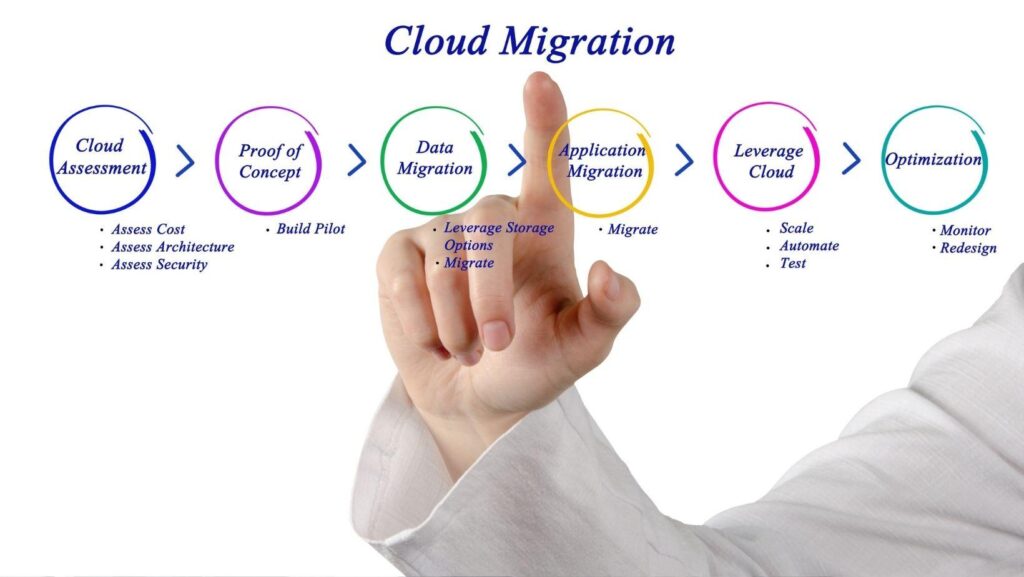
Cloud migration has been the default advice in business technology circles for over a decade now, to the point where a lot of businesses treat moving to the cloud as an obvious next step rather than a decision that needs its own justification. That instinct isn’t unreasonable. Cloud infrastructure genuinely offers real advantages for a lot of businesses. The problem is skipping the step where a business asks what specific problem the migration is supposed to solve, and migrating anyway because it feels like the modern thing to do.
That gap between following a trend and solving an actual problem is exactly where a lot of migrations go sideways, and it’s exactly the gap a provider of managed technology services in Charlotte is positioned to catch before the migration starts, not after it’s already underway.
The Numbers Tell a Sobering Story
Cloud migration projects fail to meet expectations far more often than the marketing around cloud computing would suggest. Flexera’s State of the Cloud research has found that organizations consistently waste roughly a third of their cloud spending through unclear application dependencies, unrightsized resources, and other planning gaps that surface only after a migration is already underway, and that formal readiness assessments meaningfully improve the odds of staying on time and on budget. Notably, the same research found that organizations conducting a formal readiness assessment before migrating have more than double the success rate of those that don’t.
That gap, between businesses that plan deliberately and those that migrate because it’s what everyone else seems to be doing, is the single biggest predictor of whether a migration actually delivers value or becomes an expensive lesson.
Questions a Real Business Case Actually Answers
What specific problem does this solve?
“We should be in the cloud” isn’t a business case. “Our on-premises server can’t handle remote access reliably, and it’s costing us productivity every week” is. A migration built around a specific, identifiable pain point has a much clearer definition of success than one built around a general sense that cloud is better.
What’s the realistic cost, including the parts nobody budgets for?
Migration costs rarely stop at the sticker price of a new cloud platform. Data transfer costs, retraining time, temporary dual-running of old and new systems, and ongoing usage costs that scale unpredictably with demand all belong in a realistic budget, not just the initial setup fee.
Which applications actually benefit from moving, and which don’t?
Not every system needs to move to the cloud at the same time, or at all. Some applications run better and more cost-effectively on-premises, at least for now. A blanket “move everything” approach ignores this and often creates more complexity than it removes.
Who owns cloud cost management after the migration is done?
Unmanaged cloud spending is one of the most common reasons migrations that succeeded technically still fail financially. Someone needs to own ongoing cost monitoring, or usage creeps upward quietly until the “cheaper” cloud environment costs more than what it replaced.
What Separates a Justified Migration From a Trend-Driven One
|
Trend-Driven Migration |
Reason-Driven Migration |
|
“We should be in the cloud like everyone else” |
A specific operational problem the current setup can’t solve |
|
No formal readiness assessment |
Application dependency mapping and a documented plan |
|
All systems migrated at once |
Systems prioritized by actual benefit and readiness |
|
No clear cost ownership after go-live |
A defined process for monitoring and managing ongoing usage |
|
Success measured by “we moved” |
Success measured against the original stated problem |
The right column takes more upfront work. It’s also the difference between a migration that delivers what it promised and one that becomes a multi-year budget headache.
Why This Matters More for Growing Businesses Specifically
A growing business has less margin for a migration that goes over budget or misses its timeline than a large enterprise with deeper reserves. A poorly planned cloud migration doesn’t just cost money; it diverts attention and resources away from the growth priorities the business should actually be focused on. That makes the readiness assessment step even more important for a smaller company than for a large one, not less.
Getting the Reason Right Before the Move
Businesses considering a cloud migration are better served starting with an honest assessment of what’s actually not working today, rather than a general assumption that cloud is inherently better. Working with a provider that will ask hard questions about the actual business case, rather than simply executing whatever migration is requested, tends to produce outcomes that hold up months and years later, not just on the day everything goes live.
Following the Destination, Not the Trend
Cloud migration can deliver real value: better remote access, easier scaling, reduced hardware maintenance. It delivers that value when it’s chosen to solve a specific problem, not adopted because it’s the expected move. Businesses that start with the reason, rather than the trend, are the ones far more likely to look back on their migration as a genuine improvement rather than an expensive detour.